
Tyrone Wright, or Rone (the pseudonym by which many Melbourne residents know him), was born in 1980. The Australian street artist lives and works in Melbourne at the intersection of photorealism and street art. He is renowned for his realistic portraits executed in street art and mural techniques. Rone often depicts ordinary people, musicians, and representatives of urban culture. In this overview, we’ll explore in greater detail the biography of this talented artist, whose works can be seen on the streets of Melbourne and other cities.
Rone’s Biography
Rone grew up in rural areas near the port town of Geelong, Victoria. He managed to move to Melbourne only in 2001, and just a year later he began actively decorating skateboards and skate parks. Over time, his stencils and drawings could be seen on walls throughout Melbourne.
One of the Australian artist’s main signatures is his creation of “Jane Doe” images (recurring placeholder female names).
Early in his career, Rone worked with the wheat-paste technique (a special wheat paste) to create original and vibrant stickers in busier and more crowded locations. Somewhat later, he began experimenting with traditional painting materials: for example, rollers and brushes of various sizes and shapes.
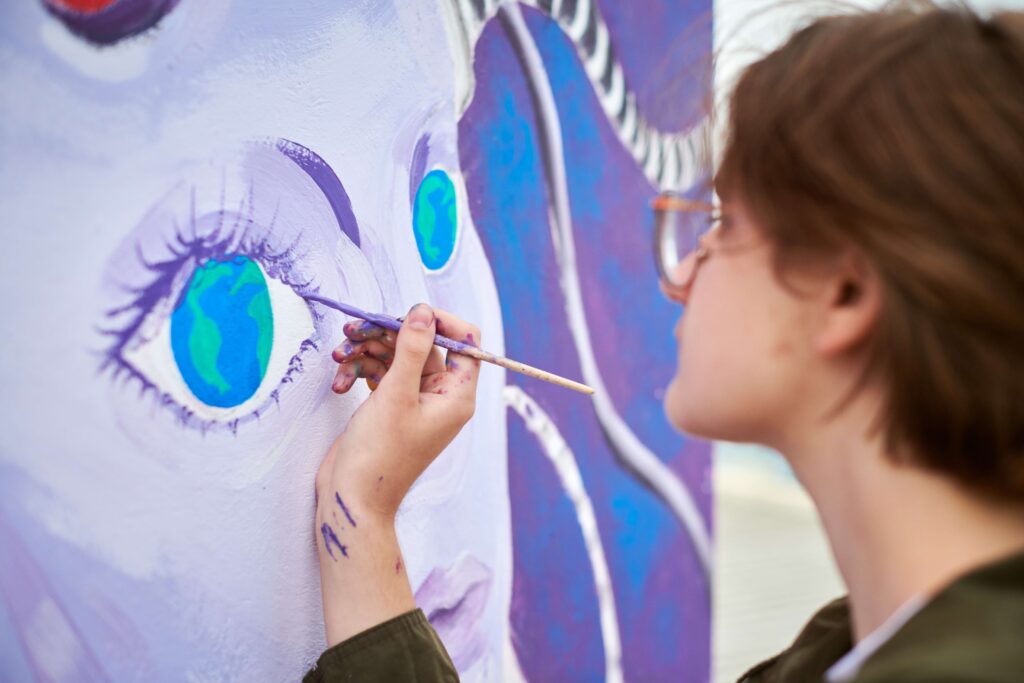
Among the most notable places where the street artist has worked are New York, Los Angeles, San Francisco, Paris, Miami, London, Tokyo, Berlin, Hong Kong, Mexico, Havana, Santo Domingo, Port Vila, and Christchurch.
Today, Rone’s most popular works can be found in various galleries. Moreover, his works have been successfully acquired by numerous renowned institutions: for example, the National Gallery of Victoria and the National Gallery of Australia. True art connoisseurs can see Rone’s works at Stolen Space (London), Opera Gallery (New York), White Walls (San Francisco), Urban Nation (Berlin), and Backwoods Gallery (Melbourne).
Furthermore, the Australian artist has actively worked on museum exhibitions for Jean Paul Gaultier (the French fashion designer), and he is also an ambassador for the Japanese brand Uniqlo.
In February 2021, he was fortunate to receive a grant for the development and popularisation of art. The grant was issued by the Australian federal government, amounting to $1.86 million. This is one of the largest sums in history to be awarded to a single artist in Australia.
Exhibitions and Works of the Australian Street Artist
Since 2016, Rone has been actively working on creating immersive art installations in abandoned buildings. One of the first installations was EMPTY, which took place in the old Star Lyric Theatre building in Fitzroy, Melbourne. The theatre opened in 1911 and accommodated up to 2,300 spectators. It was one of the first permanent cinemas in Victoria. When Rone learned that the theatre building was scheduled for demolition, he decided to use the space to create his own art exhibition. In just the first 10 days of the exhibition’s operation, 12,000 people visited. Photographs previously presented at the exhibition are now part of the National Gallery of Victoria’s permanent collection.
In 2017, Rone received an invitation to transform and decorate the machine rooms of the old Alphington Paper Mill. This mill was built in the 1910s. It is considered the first paper mill in Victoria. Rone began work on his own secret project, according to which he developed a series of frescoes, decorating the dilapidated building from within. However, only a small number of people were able to see the talented artist’s works due to occupational health and safety requirements. The artist named his works ALPHA. To attend this exhibition, people were asked to wear high-visibility vests and hard hats, and before beginning their visit, they listened to a mandatory safety briefing. After the organised exhibition, the building was demolished.
In 2017, Rone managed to organise another immersive show called OMEGA, which took place in a small wooden cottage. This was partly an art exhibition and partly an installation. OMEGA is considered the artist’s first project that went beyond creating standard portraits in gradually deteriorating buildings. This project allowed him to create a fully immersive effect for viewers. During the work, Rone managed to recreate an archetypal mid-century Australian interior in which the former resident and owner of this cottage grew up and lived. Over 10 days of this unique show, 8,000 people visited. The wire fence surrounding the block was filled with queues of people standing for hours waiting for the opportunity to see the original show.
Having received incredible feedback from the OMEGA project, Rone did not abandon his future ideas. Riding this wave of popularity and rapid success, he managed to organise a multi-storey art exhibition at the Burnham Beeches mansion (a streamlined Art Deco-style mansion) in the Dandenong Ranges (low mountain ranges in Victoria). This mansion was built in 1933, but the structure had stood empty for a quarter of a century. This was the EMPIRE exhibition, which took approximately one year to organise. Therefore, the team lived in the mansion all this time to complete everything. The project opened in March 2019: over 6 weeks, more than 25,000 people visited the exhibition. Guests were able to see 14 enormous frescoes created and dedicated to the theme of the estate’s history.
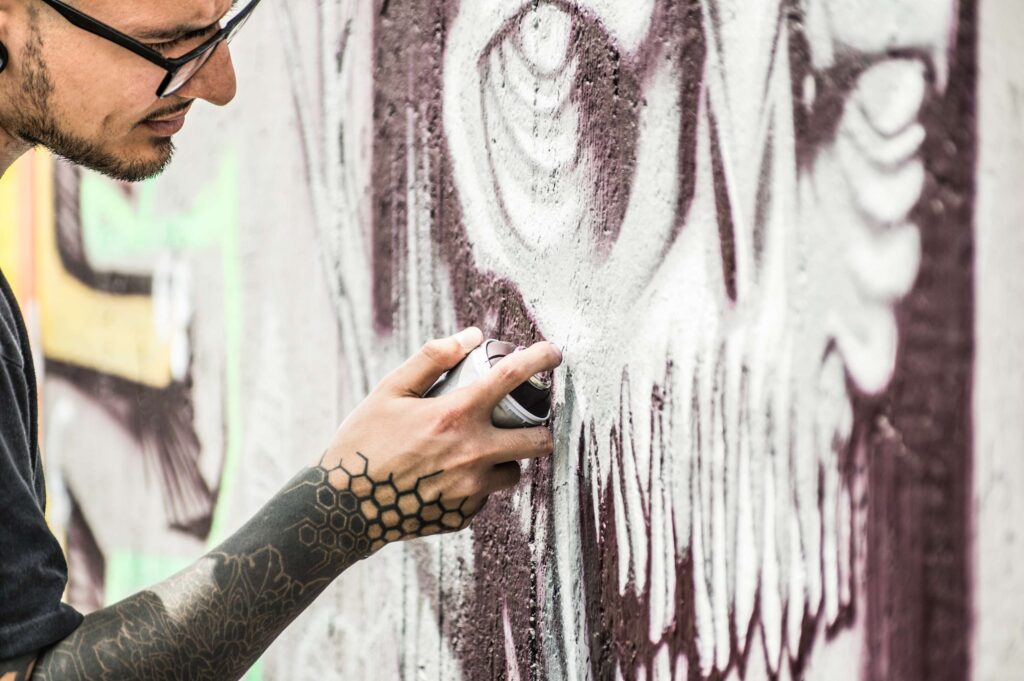
In late 2020, the artist participated in Melbourne’s first “artcade”. This project was dedicated to bringing people back to the city after prolonged COVID-related lockdowns. Rone, together with other renowned artists (Adnate, Meggs, and Makatron), was given free access to various shop windows that had been vacated by tenants during the downturn. As a result, Rone painted a work titled “Sleeping Beauty”. In this way, he managed to show the city in all its glory, gradually awakening from a deep and prolonged sleep.
When approximately 15 years had passed since the Australian artist left his native city of Geelong, he was again asked to return. As a teenager, the budding artist had “decorated” the walls and other surfaces of his city with illegal stencils, but over time he became welcome here and was invited to hold a solo exhibition at the Geelong Art Gallery. This gallery is considered one of the largest regional galleries in all of Australia. As a result, city residents had the opportunity not only to familiarise themselves with the unique work of local talent displayed in the gallery’s main wing (the wing was transformed into an immersive installation), but also to learn more information about his career and other equally popular works.
For example, in the gallery’s large hall, guests were presented with a retrospective of his works that spans his entire creative output: from early stencils and street art to photographs documenting his major installations created over time. Over 80 days, approximately 50,000 people were able to visit the exhibition.
Today, Tyrone Wright’s work reflects the contemporary development of street art, in which one can observe how ordinary street art confidently moves beyond standard graffiti. As a result, this art is gradually becoming a form of socially significant visual statement.